Cricket effect in Bangladesh: How tournaments influence consumer behavior and local businesses
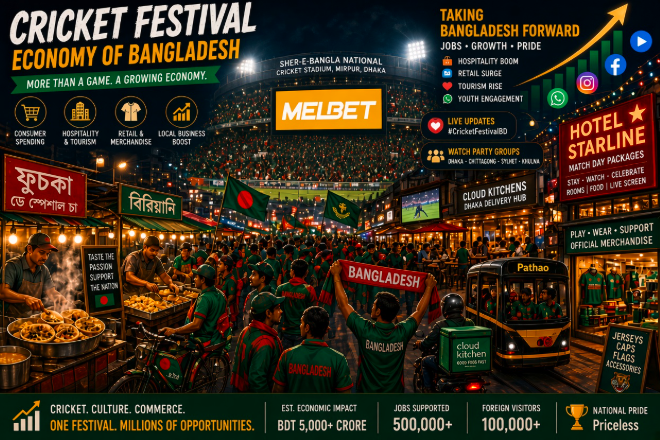
A couple of hours before the match starts in Mirpur, the place is packed. People are selling flags and caps at the stadium gates, snacks are being sold nearby, and rickshaws are lining up closer to the exit. Nearby cafes are moving their tables closer to the TV because the place will fill up earlier than usual today.
Against this backdrop, the BPL final took place in January 2026, with the Rajshahi Warriors defeating the Chattogram Royals by 63 runs. The match kicked off at 7:00 P.M. under the floodlights at Sher-e-Bangla National Cricket Stadium, and the stadium was sold out. Tanzid Hasan emerged as the hero of the final, scoring a century off 62 balls, and his team received 2.75 crore taka in prize money. While the stands kept their eyes on the score, another game was unfolding around them, one that had become part of the country’s economy. In that encounter, the winner was whoever fed the crowd and drove them home.
The 2024/25 Bangladesh Premier League season has already shown just how much fans are willing to spend on tickets. According to the BCB, ticket sales reached a record 12.25 crore taka, whereas the total for the previous ten seasons combined was about 15 crore. The board cited digital sales as the main reason. The BCB sold the rights to electronic ticket sales for three years, at 1 crore taka per year.
The following season, 2025/26, lasted four weeks: after kicking off in Sylhet, the league moved to Dhaka, where the remaining group stage matches, the playoffs, and the final were played. The schedule included 34 games, and as the teams moved from city to city, so did the demand for hotel rooms, taxis, and jerseys with the players’ names on them.
Cricket in this country has long transcended the realm of sports. A big cricket tournament functions like a short-lived festival: for several weeks, the city takes on a different rhythm, and spending rises sharply. The question is, who profits from this, and how can we ensure that the impact doesn’t end after the final?
How Cricket Tournaments Are Changing Fans’ Habits in Bangladesh
The first thing to change is the daily routine. On days when big games are on, people try to get off work early, and dinner moves in front of the TV. A big screen and a plate of snacks have long been part of a supporter’s evening.
Evening T20 matches take place after the workday ends, including tournaments in India and Sri Lanka, which are only half an hour apart in time. Watching these clashes easily turns into a family evening with tea, lively commentary, and debates about the game.
The 2025/26 BPL was broadcast on T Sports and its YouTube channel, as well as on streaming apps. The Asia Cup 2025 was broadcast in its entirety on Banglalink’s Toffee platform. The Bangladesh national team advanced to the Super 4 stage, and the company says the tournament garnered 38 million views. The clash against India peaked at 3.3 million views. A package including the Asia Cup and Premier League matches costs 25 taka per day, 55 taka per week, and 110 taka per month. For that price, you can watch a showdown on the mobile app on your way home, on the website, or on a smart TV in your living room.
Cricket attracts a large digital audience. During the 2023 ODI World Cup, Toffee had up to 12.8 million active users per month and up to 3 million viewers per day. In the first week of the 2024 T20 World Cup, the platform recorded 100 million minutes of viewing time. A single match between Bangladesh and Sri Lanka garnered about one million views. Such an audience attracts interest from advertisers: Toffee works with the country’s leading brands.
The way people eat during games is also changing. Specific figures are available for the football World Cup 2026: one major delivery service reported a rise in orders of about 20% over the tournament and 35% on days of high-profile fixtures. Cricket shows a similar trend. During the ICC World Cup 2023, establishments in Bangladesh competed with promotions and match screenings, and a delivery service offered discounts on restaurant visits.
Demand for team flags and merchandise spikes at predictable times: flag vendors in Dhaka know their peak seasons – national team games and national holidays in March and December. One sports goods vendor in Gulistan says that the Cricket World Cup boosts sales just as much as football tournaments do. Estimates of the total sporting goods market vary, ranging from 1,000 to 2,000 crore taka per year, and it is growing by 6-10% annually. Demand, however, depends on price: when products are available for every budget, people buy shirts and flags more often, so it’s a good idea to stock affordable options alongside branded jerseys.
During the showdown, people always have their phones within reach, using them to keep track of the score and discuss the referee’s calls with friends. For those who couldn’t make it to the stadium, social media feeds serve as a substitute for the stands: you can still feel part of the crowd. From that same phone, you can open the MelBet app and check the game odds on the MelBet – sports betting platform.
Some fans travel with the team to away fixtures. For a game like this, they take a day off work and stay overnight in a neighboring city, and such a trip costs more than a typical evening in front of the TV. In addition to the clash itself, the trip often includes dinner in an unfamiliar place and a stroll around the area.
How Local Businesses Profit from Cricket Tournaments in Bangladesh
There are many different professions involved in a single game, and each has its own peak season.
Hotels and cafes near the stadiums feel the impact first. As the BPL moves from city to city, foot traffic shifts with the teams: players, coaching staff, and TV crews book rooms, while fans head to cafes. Establishments add big-screen broadcasts and special match-day menus. In neighboring regions, the effect is reinforced by the league schedule. In the Pakistan Super League, regular clashes have turned the league into a seasonal source of business for hotels and street vendors.
The evening game coincides with dinnertime, and street vendors make a quick profit. Small eateries make sense preparing meal sets in advance and staying open until the end of the encounter. In India, this is how they do it for the IPL: restaurants, delivery services, and advertisers plan for the season in advance.
Sports goods stores and garment factories thrive from one tournament to the next. Orders for flags and jerseys with the numbers of favorite players come in waves around major encounters. The main wholesale sports goods markets, Cooperative Twin Tower Sports Market and Railway Super Market, are located in Gulistan, Dhaka. According to estimates by the industry association, about 70% of the country’s sports equipment is imported, with the remainder coming from local manufacturers. The largest center for such production is located in Pirojpur. The Nesarabad district accounts for about 75% of all locally produced bats. More than 65 workshops in over 15 towns and villages produce about 300,000 bats a year. According to estimates by local industry stakeholders, more than 12,000 people are employed in this sector. Artisans use local wood, ranging from kadam to neem shishu, which helps keep production costs low. The bats are sold everywhere from schoolyards to tournaments across the country, and manufacturers are already eyeing export opportunities.
Business surrounding the tournament is spread out over time. The electronics sector is the first to respond: ahead of the football World Cup 2026, demand for large TVs rose significantly, and it’s logical to expect the same ahead of major cricket tournaments. On match days, temporary stalls pop up near the stadium for a few hours. Their earnings are one-time, but the season offers many such days. After the final over, the crowd leaves almost simultaneously, and along with it, the number of rickshaw rides and rides booked through apps increases.
How Small Businesses Can Prepare for Cricket Tournaments
The boom has been going on for weeks, and the winner is whoever is ready for the tournament’s first encounter. You can start small.
The first step is the game-day menu: a set meal for a group of four, and a kitchen that stays open until the end of the evening showdown. Ahead of one of the Asia Cup 2025 matches, an Emirati publication released a list of places in Dubai where you can watch the encounters, including a bar with 18 screens. A small coffee shop just needs one large TV and reasonably priced snacks.
Limited-run productions are ideal for sewing shops and workshops, such as a small batch of jerseys for a specific series or a flag featuring the colors of two teams. After the final, such merchandise loses relevance, and this deadline encourages fans to buy.
To promote the event, all you need is a social media post announcing the promotion a day before the game or a jersey giveaway among your followers; no big budget required. It’s also convenient to take orders via messaging apps. Collaborative offers work well. A guesthouse can sell an overnight stay bundled with a ride from a taxi driver they know, and a café can add a jersey from a nearby print shop to a meal set. Opportunities for such offers are clearly visible in advance on the game schedule. For many businesses around the arena, a match means peak demand, so it’s worth planning ahead.
Cricket Tourism and the Impact of Tournaments in Bangladesh
Sri Lanka provides the most striking example from a neighboring region. In the first 45 days of 2026, the country welcomed more than 400,000 tourists – a 12.5% increase from the previous year – and officials attributed the growth to the ICC World Cup clashes. In Colombo and Kandy, city hotels were fully booked on match days; demand shifted to Mount Lavinia and Negombo, and guests stayed longer than usual. At the same time, room rates at five-star hotels in Colombo rose from approximately $300 to nearly $500. Service standards are also being refined: against the backdrop of rising guest numbers during the ICC World Cup 2026, the Institute of Tourism and Hospitality Management added modules on hosting guests at big events and on sports tourism.
In Bangladesh’s cricket cities, visitors have plenty to do even after the match. The Sylhet International Cricket Stadium is nestled among the hills, and in its Green Gallery, fans sit right on the grass under the trees. From the city, you can take a trip to the tea gardens and the Ratargul swamp forest. For a family from Dhaka, a trip to a match in Sylhet easily turns into a short vacation. The 2025/26 National Cricket League schedule even included the resort town of Cox’s Bazar among its venues.
The first steps toward such trips were taken on October 5, 2025, when the BCB and the Bangladesh Tourism Board signed a memorandum of understanding on the development of cricket tourism. The parties plan to conduct joint campaigns, trophy tours, and cultural events. Together with tour operators, hotels, and agencies, they aim to develop travel packages for domestic and international visitors.
We also have our own experience hosting a major event. Bangladesh co-hosted the ICC World Cup 2011 with India and Sri Lanka, and Mirpur hosted the group stage matches as well as the quarterfinal between Pakistan and the West Indies. Back then, national team jerseys were made in Dhaka for 300 taka each, with the expectation that visitors would want to take home a souvenir from the tournament.
T20 and ODI games draw boisterous crowds and are perfect for those seeking excitement. A multi-day Test in Sylhet, such as the one in May, is a different experience: you can watch it from the Green Gallery and take your time. For these visitors, a leisurely itinerary, including a long dinner in town after the showdown, works best.
Bangladesh Cricket Calendar and Upcoming Tournaments
The domestic season kicked off on October 3 with a four-day NCL tournament. The BPL will not be held during the 2026/27 season; plans are in place to bring the league back after a restructuring. Other events will fill the gap: two home Test matches against the West Indies, followed by the national team’s tour of South Africa from November 15 to December 13. According to the schedule, the T20 stage of D3, a new six-team franchise competition, will begin on December 15 in Barishal. The revamped Jibanananda Das Stadium will host the opening fixture, and the BCB plans to gradually hold the tournament in all divisions across the country.
There are 42 clashes in D3: after the 19-game T20 stage in January, four-day matches will begin, and the 50-over format will start in May, so the season will last at least until May. Corporate groups, including Walton, Fortune Group, and Citizens Bank, have acquired the franchises, and each has signed a three-year contract with the BCB. If plans are made based on this schedule, it will be easier for small businesses to maintain a steady rhythm without gaps between tournaments.
How Regular Cricket Events Support Local Economies
To avoid the impact being dependent on a single major competition, smaller and regular events are also needed. BPL organizers have said they don’t want to limit the league to the field and expect it to benefit both culture and business.
The draft budget for fiscal year 2026/27 allocates 2,586 crore taka to the Ministry of Youth and Sports, an increase of 782 crore over last year’s revised budget. Plans for sports villages in all 64 districts were also announced. The Minister of Finance stated that sports should become an economic sector where events, media, merchandise, tourism, and services collectively generate revenue and jobs. If a district sports venue hosts at least two organized sports weekends per month, transportation, cafes, hotels, and local shops all benefit financially. The match itself is just one link in this chain.
The Match Doesn’t End at the Stadium: Digital Fans and Business Opportunities
Today’s sports fan rarely sticks to just one screen. They watch the game, check player stats, read the latest news, and discuss it all in a chat with friends. For those who want to test their predictions, MelBet Bangladesh offers online cricket betting with a wide range of options, from major tournaments to regular series.
The platform’s interface is available in more than 45 languages, including Bengali. Between matches, you can switch to one of over 30 sports. MelBet withdrawal is available via local payment methods, and customer support is available 24/7. The platform’s terms and conditions are discussed in detail in independent reviews.
Bangladesh’s cricket schedule is packed: in March, Mirpur hosted three ODIs against Pakistan; in May, two Tests from the same series were played; and now showdowns against the West Indies, a tour of South Africa, and domestic tournaments are on the horizon. Games are held almost every month, so businesses can plan their year around them without relying on a single event.
Before the BPL returns, home series and D3 matches are ahead. During this time, cafes and workshops will have a chance to see which menus and jerseys are in demand and will be ready to welcome the league with a prepared offering.