Trends in Women’s Cricket: New Era of Power, Speed, and Historic Records
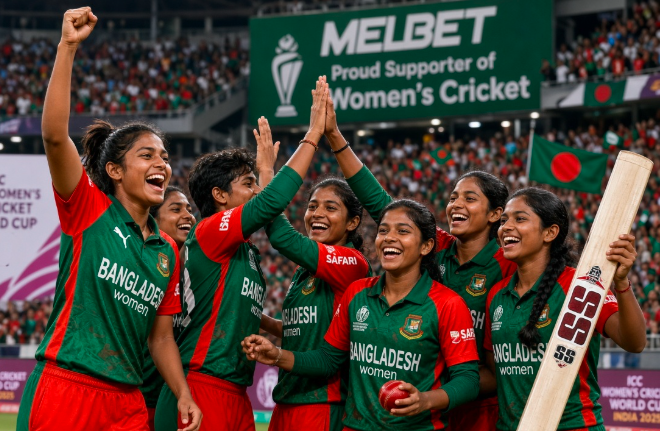
On June 14, Edgbaston Stadium hosted one of the most outstanding matches of the year, one that perfectly reflects current women cricket trends. Bangladesh national team player Juairiya Ferdous put on an impressive performance, scoring 50 runs off just 33 balls in the victory over the Netherlands. She hit 7 fours and 2 sixes, and together with her batting partner, she gave the team an excellent start: their partnership yielded 67 runs in 7.4 overs.
“I can’t explain this feeling. Opening batters have to use the powerplay fully, so I tried my best,” Ferdous said after being named Player of the Match.
Her performance perfectly reflects how female cricket is evolving today. The game is becoming more dynamic and entertaining, and is attracting increasing attention from audiences across the globe. At the same time, the pool of young female athletes capable of making their mark at major international tournaments early in their careers is growing.
Global Context: Record Growth and Financial Equality
Globally, women’s professional sports are experiencing growth in commerce, athletics, and viewership. Sanjog Gupta, CEO of the International Cricket Council, notes that women’s tournaments are changing the sports industry on creative, commercial, and cultural levels, and that these changes are now irreversible.
The recent ICC T20 World Cup 2026, held in England and Wales, set an all-time attendance record: over the course of 25 match days, 245,815 spectators attended the stadiums, which is more than 100,000 above the previous record. The tournament final at the legendary Lord’s Cricket Ground drew more than 28,000 fans: the showdown between the Australia and England national teams, which ended in a victory for the Australians, generated more than £1 million in ticket sales and became the highest-grossing women’s match in cricket history.
Television and digital viewership figures also reached record highs. Broadcasts on Sky Sports garnered 15 million viewing hours, making this tournament the most-watched T20 World Cup in the network’s history. Meanwhile, video content on the ICC’s own digital channels racked up 1.7 billion views in just the first 19 matches of the tournament. MelBet ambassador Dwayne Bravo also sees women’s cricket reaching new heights: the quality of play is improving, franchise leagues are developing, and leading female cricketers are gaining more and more opportunities to prove themselves on the world stage.
The financial side of the game now fully reflects its popularity. Starting in 2024, the ICC has been awarding equal prize money to men and women for the same finishing positions at World Cups. A striking example of these changes is the prize pool for the ICC Women’s World Cup (ODI format), which totaled a record $13.88 million. ICC Chairman Jay Shah emphasized the significance of these changes: “Our message is simple: women cricketers must know they will be treated on par with men if they choose this sport professionally.”
Bangladesh on the World Stage: Triumphs and Depth of the Squad
Against this incredibly positive international backdrop, Bangladesh women cricket is achieving success and steadily solidifying its position among the world’s elite. In early 2026, the Bangladesh national team triumphed at the global qualifying cricket tournament for the World Cup, which was held in Nepal. The team won all seven matches and claimed a well-deserved first-place finish, earning its fourth qualifying tournament title in history.
The team is led by experienced captain Nigar Sultana, for whom the 2026 tournament marks her sixth World Cup and her third as national team captain. Sultana herself describes leading the national team as both a serious challenge and a great privilege, and she considers the progress of young players and the strengthening of team spirit to be the main achievements of recent years. Her words are backed up by real achievements: thanks to standout performances in Group 1 at the World Cup, the Bangladesh national team secured a direct berth for the next World Cup in 2028, bypassing any qualifying rounds. At the tournament itself, the team played superbly, securing an important victory over Pakistan by a margin of 23 runs.
One of the Bangladesh national team’s main strengths is its diverse and deep squad of bowlers. It includes vice-captain Nahida Akter, the country’s leading wicket-taker in women’s ODIs, along with Rabeya Khan, Fahima Khatun, and Sultana Khatun, who set a personal record for wickets in the spring of 2026.
Fast bowler Marufa Akter has become a true sensation in the attack. At the prestigious Asia Cup 2026, she demonstrated superb skill, taking 8 wickets with an average of 9.50 and an economy rate of 5.06. Her ability to influence the game is impressive: in the match against the UAE, which ended in a 34-run victory for Bangladesh, Marufa masterfully dismissed the opposing captain with a powerful inswinger on just the fourth ball of the innings.
The batting lineup is also regularly bolstered by talented players capable of breaking historic records. Batter Shorna Akter impressed against South Africa at the 2025 Women’s ODI World Cup, scoring 51 off 35 balls, including three fours and three sixes. She reached the 50-run mark in just 34 balls, setting a new all-time Bangladesh record for the fastest run-scoring rate in women’s ODIs. In addition, Shorna became the first female cricketer in the country to hit three sixes in a single innings in this format.
Internal Investments and Professional Development
To maintain such a high level of play on the international stage, the Bangladesh cricket board is implementing a large-scale program of professionalization and significant investment in domestic tournaments. At the end of 2025, the board of directors approved a 35% increase in salaries under central contracts. Top-level athletes now earn 160,000 taka per month, and daily per diem payments during international tours have been increased to $75.
In addition, the national contract pool has been expanded from 30 to 35 players, allowing a much larger number of female cricketers to focus entirely on their training and professional careers. BCB Director Nazmul Abedeen Fahim emphasizes the ongoing commitment to developing the sport: “The board has been thinking about the various ways that we can take women’s cricket forward.”
A core focus of long-term development is the system for training the next generation of female cricketers. For Bangladesh, youth competitions are gradually becoming a full-fledged stepping stone between domestic cricket and the senior national team. International tournaments at this level give players the opportunity to get used to the higher intensity of matches, their opponents’ different playing styles, and the pressure at an earlier stage.
The upcoming ICC Women’s U19 T20 World Cup 2027, which Bangladesh will co-host with Nepal, makes this initiative especially significant. With 16 national teams set to participate, the tournament is both a major international occasion for the country and an opportunity to further strengthen its system for developing women’s teams.
Preparations for the next cycle are already underway through international competition. In October, the Bangladesh youth national team will participate in a T20 three-match series in Faisalabad, Pakistan, alongside the national teams of Pakistan and Sri Lanka. The tournament format features a triple round-robin, in which each team plays six matches leading up to a potential final. The organizers chose this structure to provide the participating teams with as much competitive experience as possible ahead of the upcoming major youth tournaments.
For Bangladesh, developing this area is crucial. A strong youth system makes it possible to gradually build a pool of talent for the national team and create a clearer path from domestic competitions to international cricket. The more high-quality matches female players get before moving up to the senior level, the easier it will be for the national team to refresh its squad in the future and maintain competition for spots on the team.
As a result, women’s cricket development in the country is taking a more structured approach: youth competitions help develop the next generation of players, domestic tournaments provide regular playing experience, and the national team serves as the culmination of this system.
The professionalization of women’s cricket in Bangladesh is gradually extending beyond the playing squad to encompass other roles within the sports system. One notable area of focus is the development of women’s umpiring. For former female cricketers, this creates an opportunity to remain in professional sports after their playing careers end, applying their accumulated experience and understanding of the game in a new role.
One of the most striking examples is former cricketer Sathira Jakir Jessy, who transitioned to umpiring after her playing career and went on to compete at the international level. She has officiated at major women’s tournaments, including World Cups and the Women’s Asia Cup, and has also gained experience umpiring men’s matches. Jessy points out an important advantage of this profession: while a player’s career is limited by physical abilities and age, umpiring makes experience increasingly valuable over time. Therefore, the development of this field helps create a longer professional path for women in cricket.
This process is gradually becoming more structured. The Bangladesh Cricket Board runs umpire training programs and, since 2025, has included women in its own payment system.
Four female umpires have already received payments from the board. Current and former female cricketers are also showing interest in this profession. In particular, national team players Sharmin Akhter Supta and Rumana Ahmed have completed umpiring courses, and Mishu Chowdhury has already gained international experience officiating at the ACC Women’s Rising Teams Asia Cup in Thailand.
The growing presence of women in umpiring shows that the development of Bangladesh women cricket is gradually extending across the entire sports infrastructure. Female athletes now have more options for pursuing professional careers, and the playing experience they gain remains within the national system. In the long term, this model helps foster an environment in which women can work in cricket at various stages of their careers and in various professional roles.
Another crucial step in the development of domestic cricket was the launch of the first women’s T20 franchise league – the Bangladesh Premier League. With matches scheduled to be played at the most modern stadiums in Dhaka, Bogura, and Chittagong, the project is designed to take female athletes to a new competitive level. As captain Nigar Sultana notes, speaking highly of the prospects for the new BPL format: “If you want to compete in world T20 cricket, you need to learn from the experience of countries that are developing thanks to franchise cricket.”
Fan Engagement and New Opportunities
During the Asia Cup 2026 in Bangladesh, the television broadcast rights were held by the T Sports network, which aired all 15 matches of the tournament during prime time, attracting the widest possible audience. Asian Games matches were also available live via the Akash Digital TV platform and the Akash Go streaming service.
The players themselves actively engage with their fans: ahead of the crucial semifinal match against India, bowling star Marufa Akter warmly reached out to her fans on social media, asking them to pray for the team’s success.
As the sport’s popularity continues to grow, the ways in which fans engage with their favorite sport are also changing. More and more cricket fans are tracking team and player statistics, analyzing their current form, and, if they’re interested, taking advantage of online cricket betting on platforms like MelBet, where they can follow major international tournaments. At the same time, the digital habits of sports audiences are evolving: users increasingly prefer services that combine various forms of online entertainment on a single platform.
An Optimistic Outlook for the Future
The future of women’s cricket in Bangladesh looks promising, and interest in the team continues to grow. As early as October, the national team has a major event coming up: its first-ever two-match ODI series on Australian soil. The matches will be held at the picturesque Allan Border Field in Brisbane.
The match against the reigning world champions will be a true celebration of sport and a great opportunity to showcase their talent thousands of kilometers from home.
A Cricket Australia spokesperson, looking forward to these matches, paid the visitors a huge compliment: “Bangladesh will be a really good test, particularly with the quality they have in their bowling attack.”
Given the federation’s record-breaking financial investments, the talent of world-class players, and the outstanding support from fans, women’s cricket today offers athletes a new reality, where every time they take the pitch is a step toward global success.